Streaming conversations
Ember begins responding as tokens are generated, making Nexa feel immediate and interactive instead of waiting for a full response to complete.
 Nexa AI
First Nexa model
Nexa's first-generation text model for fast assistance, early reasoning, streaming chat, and agentic workflows.
Ember 0.5 is the first official model release in the Nexa model family. It powers the core Nexa chat experience and lays the foundation for browser assistance, memory-aware workflows, and permission-safe agent actions.
Ember 0.5 focuses on making Nexa useful from day one: clear responses, streaming output, practical reasoning, and a stable foundation for AI-native browser workflows.
Ember begins responding as tokens are generated, making Nexa feel immediate and interactive instead of waiting for a full response to complete.
Built for clear answers, writing support, explanations, planning, summarization, and practical decision support.
Handles multi-step prompts, coding guidance, comparisons, structured plans, and workflow breakdowns with a balanced response style.
Designed to support Nexa Browser features such as page understanding, form assistance, research help, and task guidance.
Structured to support future permission-aware tool use across chat, memory, browser actions, workspace automation, and creative workflows.
Served through Nexa's private model runtime with CUDA-aware local inference, keeping the core assistant stack under Nexa control.
Ember 0.5 is available across Nexa plans with different usage limits, modes, and product capabilities.
Ember 0.5 is served through the Nexa Private Runtime, not a public placeholder model page.
Nexa routes chat through Ember 0.5 for streaming responses, token tracking, and mode-based generation settings. Fast keeps answers lightweight, Thinker gives more room for planning, and Deep Thinker is reserved for heavier reasoning tasks.
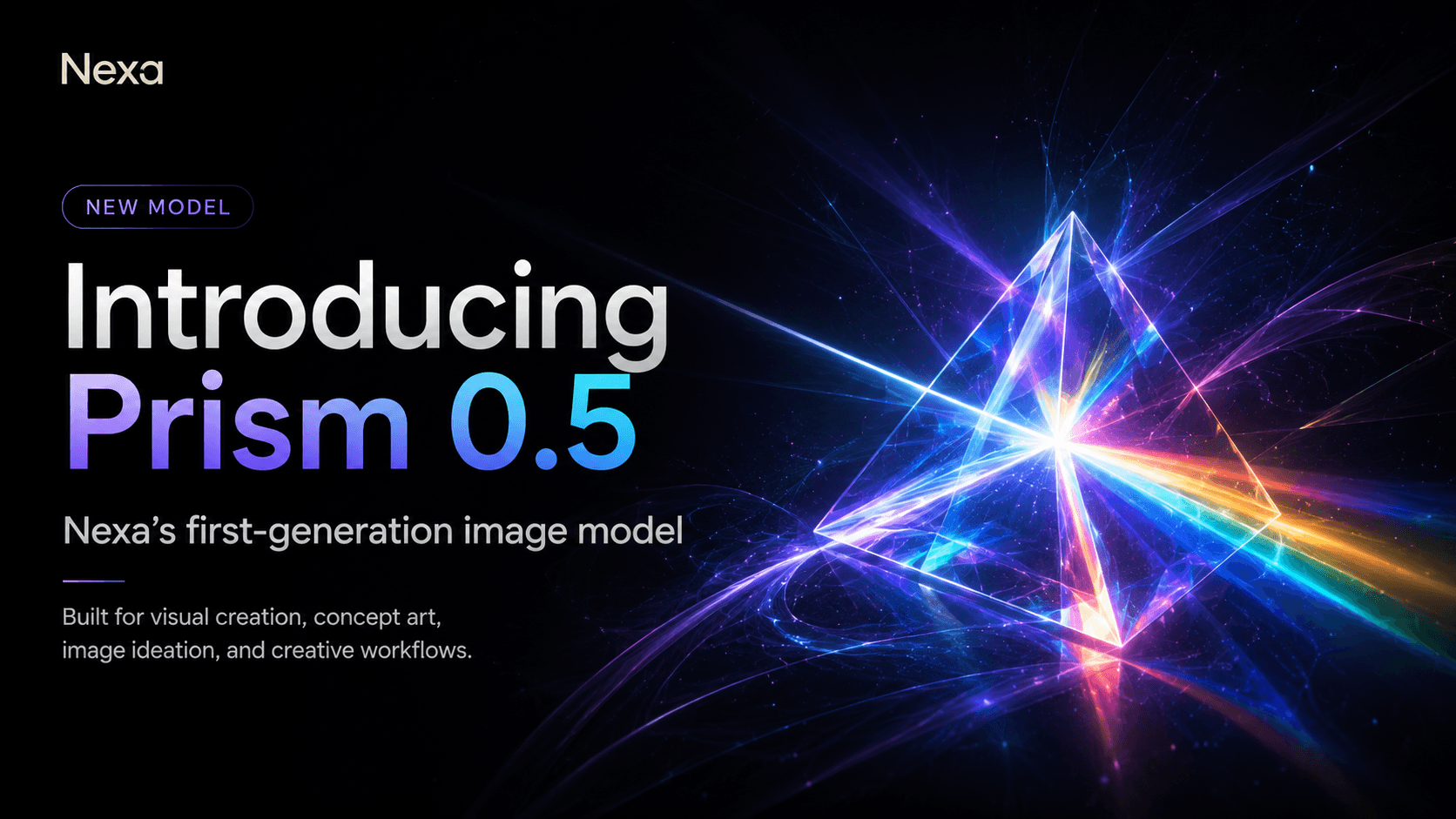
Image model
Prism 0.5 is Nexa's first-generation image model, built for visual creation, concept art, image ideation, and creative workflows.
Prism gives Nexa a dedicated visual model identity for generated images, creative direction, and image-library workflows.
Turns natural-language prompts into generated visuals for concepts, mockups, creative drafts, and design exploration.
Built for product concepts, brand visuals, app hero images, environment ideas, and early creative exploration.
Works with Nexa chat so users can describe, revise, and continue visual ideas without leaving the workspace.
Generated images appear in the user's Nexa image library so they can review, reopen, and manage previous outputs.